Hyde’s photographs
Hide and SeekHyde’s photographs turn a hidden camera into an instrument of influence and a test of John Rebus’s conscience. Made within Hyde’s Club, the images connect private surveillance to the favors and powerful reputations surrounding the club. They also become evidence Rebus can neither comfortably use nor simply forget: after keeping several photographs, he returns to them night after night before finally burning them.
Identity and Origins
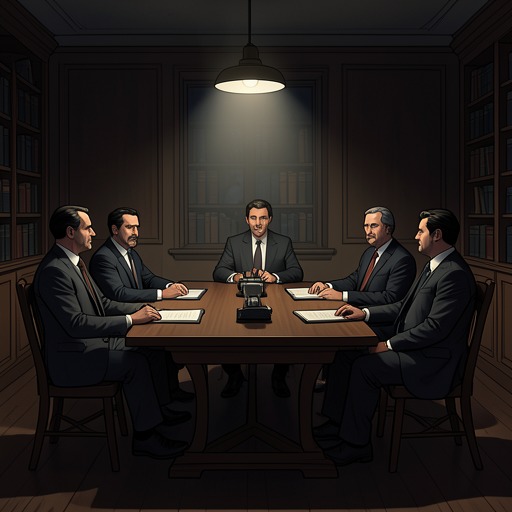
The photographs belong to the covert world Rebus uncovers at Hyde’s Club, a venue whose name invokes Robert Louis Stevenson’s Edward Hyde and the divided public and private lives associated with the character. Rebus learns that a two-way mirror allowed people in one room to watch private encounters in another, while a camera recorded what happened. The resulting images made the camera more than a means of documentation: they could preserve compromising material for use when ordinary favors were no longer forthcoming.
The club’s operation depended on concealment and unequal power. Its wealthy patrons could treat favors as part of a private arrangement, while photographs offered another means of influence. Rebus’s account of the club’s hidden activities also places the images beside a boxing ring where vulnerable men were paid to fight for the entertainment of bettors. The camera and the ring belong to the same closed environment, but the photographs have a different kind of force: they can travel beyond the room and attach its secrecy to recognizable faces and names.
Ronnie McGrath and the Camera
When Rebus first tries to understand Ronnie McGrath’s presence at the club, he cannot establish whether Ronnie had been paid to photograph influential visitors without their knowledge or had come to the venue for another reason and secretly brought a camera. The uncertainty matters. The evidence does not settle whether Ronnie was working as a covert photographer or acting independently, so the images’ origins remain entangled with the circumstances of his death rather than explained by a single clear account.
Rebus concludes that the owner of Hyde’s Club had killed Ronnie after depriving him of heroin and giving him rat poison, then arranged the scene to resemble a straightforward overdose. The discovery of Ronnie’s body had initially drawn Rebus toward the occult markings and the tableau in candlelight; at Hyde’s, he recognizes that he had mistaken incidental details for the shape of a conspiracy. The photographs redirect attention from those misleading signs to the club’s real machinery of secrecy and influence. They do not resolve every question about Ronnie’s work, but they make the club’s surveillance and the stakes of its hidden dealings legible.
Evidence, Leverage, and Exposure
The photographs’ use is described in terms of favors rather than a simple exchange of money. Rebus recognizes that images could become useful when favors were withheld, and the reply confirms that people had been photographed and framed. That distinction makes the photographs part of a wider system: influence might begin with favors given without question, while the possibility of exposure could press those relationships back into service. The images’ power rests not only on what they show but on who might recognize the people in them and what those people stand to lose.
When Superintendent Watson hears Rebus’s account, he is uneasy at the number of important people who may be implicated. Investigators have found video film as well as a substantial collection of still photographs. Some faces mean nothing to Rebus, but he recognizes others; the involvement of judges and lawyers is no longer merely a suspicion. The existence of the images therefore widens the case from a death investigation into a threat to reputations and public confidence. Rebus fears that exposing the full story could damage belief in the institutions of Edinburgh and the country, while the evidence available to authorities does not guarantee that the truth will be made public.
The public account that follows is sharply narrower than the scale of the discovery. Finlay Andrews’s and Malcolm Lanyon’s deaths are reported, and Andrews is said to have run a club whose dealings were not wholly legitimate. The reports omit details of its activities. James Carew’s death is presented as unrelated to Lanyon’s, despite their friendship, and the connections between Lanyon and Andrews remain obscured. The photographs thus stand for a larger story that has been reduced to a small, soon-forgotten scandal: evidence exists, but the public explanation withholds what would give it its full meaning.
Rebus’s Copies and Their Destruction
Rebus does not leave Hyde’s empty-handed. During a moment alone in Andrews’s office, he filches a photograph of Tony McCall. He later tells Tony that Andrews had been pursuing Tommy McCall’s haulage company and might have acquired it cheaply. Tony looks fearfully at the photograph, then tears it methodically into smaller pieces. The episode shows the image operating as a threat even outside the club: Tony understands its possible consequences, while Rebus uses it to confront him with the leverage Andrews held over his family’s business.
Rebus has also taken four photographs at random from the material at Hyde’s, keeping them with the image of Tony McCall. He hides the file in a cabinet in his flat and retrieves it at night. The photographs have become private objects he cannot dispose of casually: he studies the recognizable faces, linking them to names, handshakes, and voices. Their presence keeps the case alive after its public story has begun to fade, and their association with his decision at Hyde’s leaves Rebus with a personal burden as well as incriminating evidence.
At last, Rebus drops the four photographs into a metal wastepaper bin and lights a match. The act is not presented as a public resolution of the scandal. He has already considered the reputations at stake and the limited justice achieved; the photographs remain both proof of what happened and a possible means of bringing further damage. Burning them closes his private ritual of looking, but it also removes evidence that could have supported a fuller account. Their final significance lies in that unresolved choice: Rebus destroys the images while remaining unable to make the harm, or the silence surrounding it, disappear.